Kiambu County's Biggest Pest Problems: A Complete Guide
Kiambu County, with its fertile lands and diverse ecosystems, faces significant challenges from pests that threaten agriculture, homes, and businesses. This guide provides a comprehensive overview of the most prevalent pest issues, their impacts, and effective management strategies to ensure sustainable pest control.
Major Agricultural Pests
Agriculture is a cornerstone of Kiambu’s economy, but pests like coffee berry borers, leafminers, cutworms, and aphids pose severe threats to crops such as coffee, kale, and leafy amaranth. Coffee berry borers, small beetles that bore into coffee cherries, can devastate yields, reducing both quality and profitability. Leafminers and cutworms, identified by 26% and 30% of farmers respectively, damage leafy vegetables by tunneling through leaves or cutting stems. Aphids, noted by 87% of farmers as a major pest, suck sap from plants, weakening them and transmitting viral diseases. These pests thrive in Kiambu’s warm climate, necessitating robust management to protect livelihoods.
"Aphids are a major concern for 87% of leafy amaranth farmers in Kiambu, with 34% relying on synthetic insecticides for control." – Journal of Integrated Pest Management
Household and Urban Pests
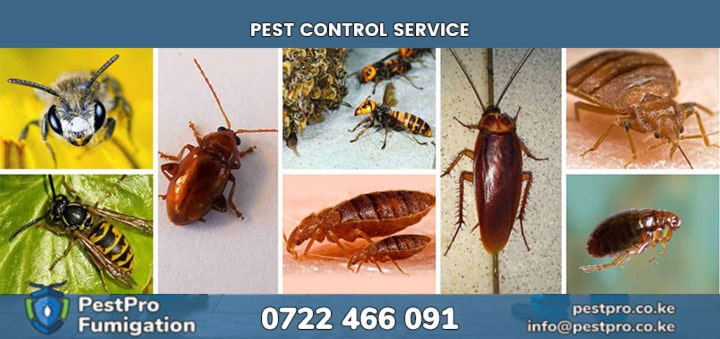
In urban areas like Juja, Thika, and Kiambu town, household pests such as cockroaches, termites, and ants are prevalent. Cockroaches pose health risks by spreading pathogens, while termites, both subterranean and drywood varieties, cause structural damage to homes and businesses. Ants, particularly in agricultural settings, can protect aphids, exacerbating crop damage. Rapid urbanization has intensified these issues, outpacing the development of adequate pest control infrastructure. Professional pest control services emphasize tailored treatments to minimize environmental impact while ensuring safety for residents and pets.
"Distinguishing between subterranean and drywood termites allows for precise intervention strategies in Kiambu’s urban areas." – Nairobi Online
Agroecological and Integrated Pest Management (IPM) Solutions
Integrated Pest Management (IPM) offers a sustainable approach to pest control in Kiambu by combining biological, cultural, and chemical methods. Practices such as crop rotation, mulching, and cover cropping enhance soil health and reduce pest habitats. Agroecological strategies, including the use of beneficial insects and resistant crop varieties, are gaining traction. A 2023 survey in Kiambu identified 31 agroecological practices, with 77% focusing on soil, water, or pest management. However, adoption remains low due to limited farmer education and access to resources. Collaborative efforts with organizations like CIFOR-ICRAF aim to co-design locally relevant solutions.
"Agroecological practices in Kiambu promote biodiversity and ecosystem services, reducing reliance on chemical pesticides." – Frontiers in Sustainable Food Systems
Challenges and Opportunities
Pest management in Kiambu faces challenges such as low adoption of IPM due to knowledge gaps and reliance on synthetic pesticides, which can harm beneficial insects and contaminate water sources. Environmental factors like water scarcity and soil degradation further exacerbate pest issues. Opportunities lie in educational programs to train farmers on IPM and agroecological practices. Partnerships with institutions like the Kenya Wildlife Service and NGOs can enhance pest monitoring and promote sustainable solutions, balancing agricultural productivity with environmental conservation.
"Rapid urbanization in Kiambu has outpaced pest control infrastructure, necessitating collaborative strategies." – The County Times
Practical Steps for Pest Control
Farmers and residents can adopt practical measures to combat pests. Regular pest inspections and monitoring help identify infestations early. For agriculture, intercropping and organic amendments can deter pests, while in homes, sealing entry points and maintaining hygiene reduce cockroach and ant invasions. Engaging professional pest control services for termite treatments ensures long-term protection. By integrating these practices, Kiambu can mitigate pest threats while fostering sustainable development.
"Early pest detection through monitoring is key to minimizing crop losses and environmental impact in Kiambu." – Pest Control Kenya